

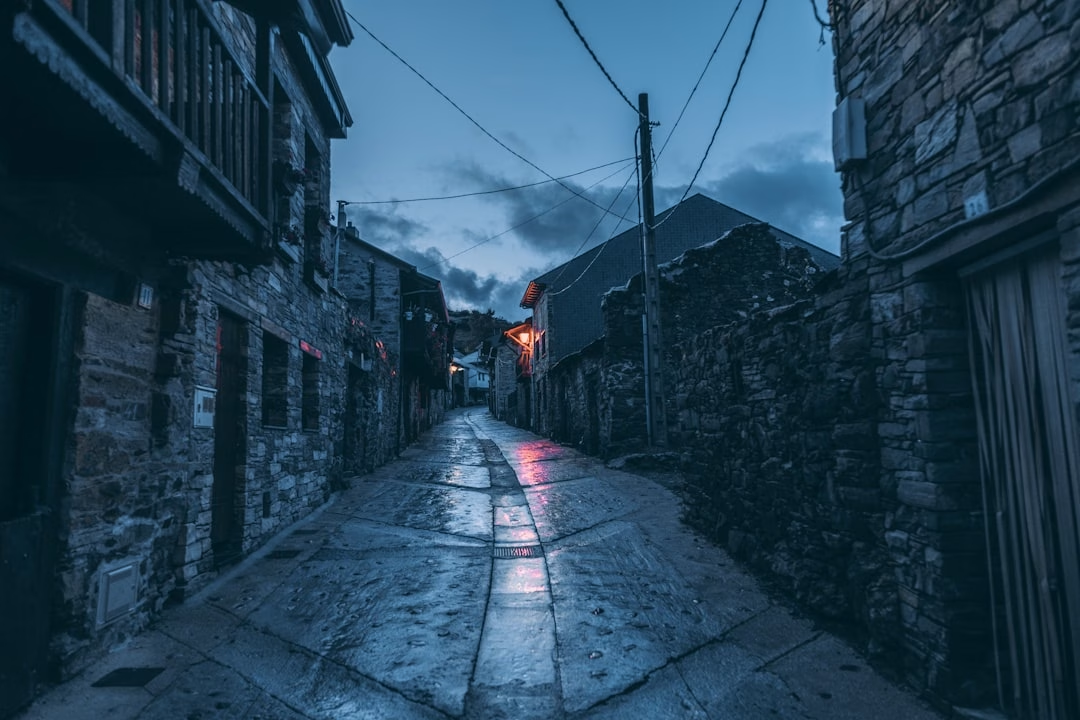
Winter shows you which walls have stories, and January in Galicia tells all of them.
Carmen runs thermal baths in Mondariz and has been watching January visitors for thirty-seven years. “They arrive looking for quiet,” she told me, “but they leave understanding the difference between empty and intimate.” January in Galicia isn’t the season when everything stops; it’s when everything becomes more itself. And the people who choose winter luxury travel here? They’re not looking for hibernation. They’re looking for the kind of authenticity that only happens when a place stops performing for tourists and starts breathing.
The Beaches Belong to Lovers and Lunatics
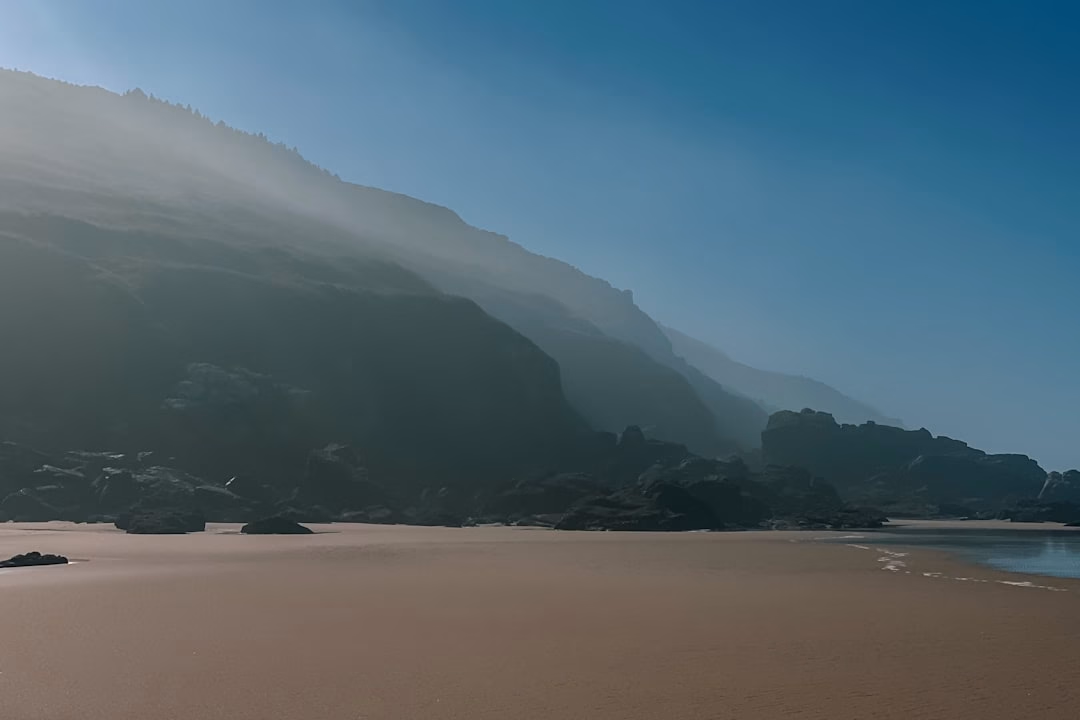
Playa de Rodas in January is not for everyone, which, in my opinion, is exactly why it’s perfect. Last Tuesday, a couple from Barcelona discovered that they had the entire strand of the pristine and protected Islas Cíes to themselves – all four kilometers of what the Guardian calls “the world’s best beach.” The woman, sensibly dressed in layers, turned to her partner and said, “This is either the most romantic thing we’ve ever done or the stupidest.” He was already pulling off his boots for a polar plunge into the crystal-clear waters. The ferry to the Cíes runs year-round because locals know something tourists don’t: January storms create the most spectacular waves, and January sun, when it breaks through, feels like a personal gift from the Atlantic.
Stone Pazos: Where Architecture Flirts with Fire
Pazos like El Agustín have been lighting the same fireplaces since the 1700s. Agustín himself wrote in his diary that “winter is when stone buildings reveal their personalities. Summer makes everything look the same, but every conversation is more intriguing with a generous copa of aged Albariño near the crackling granite hearth.” These aren’t your typical hotel lobbies. They’re stages for human drama, with winter experiences that money can’t buy but patience can earn.
The Queimada Season (When Everyone Becomes a Pyrotechnician)
January is queimada season (though nobody will admit it officially). The ritual of burning aguardiente with coffee beans, orange peel, and sugar becomes an art form when performed in freezing courtyards by people who’ve had enough wine to believe they’re medieval wizards. There are various interpretations regarding the proper incantation while creating blue flames within 16th-century stone walls. Whichever Galician conjuro is chosen, the flames will always win, and by midnight everyone is friends again.
Lacón con Grelos: The Stew That Ruins All Other Winters
In Galicia, winter is not endured. It is honored – with fire, with smoke, with pork, with patience. And at the center of it all sits lacón con grelos, a dish so elemental that the region’s greatest chefs still argue about where it is done best.
According to Galicia’s culinary heavyweights, the soul of the cocido lies in the marriage of three things: grelos at their bitter-sweet peak, cachelos that collapse into cream at the touch of a fork, and cured meats that have spent months waiting for cold weather to justify their existence. In Lalín, temples like La Molinera are revered for their treatment of the cachucha (the pig’s head, considered by many chefs to be the true queen of the pot). In Culleredo, Casa Bibiana is praised for its smoked lacón and deep, vegetal broths. In Oza-Cesuras, the Pazo de Santa Cruz de Mondoi turns the cocido into a pilgrimage, while in Cambre and A Coruña, houses like Casa Celia and Restaurante Ricardo keep the tradition grounded, generous, and unashamedly abundant.
This is not a light meal. It is not a “dish.” It is an event, a ritual, a winter declaration. It is what happens when time, salt, smoke, frost and appetite finally align. One spoonful and you understand why Galicians don’t romanticize winter with candles and blankets. Instead, they do it with steam rising from a pot that could feed a small village and probably has, for generations. Pair it with a bottle of Ribeiro from local producers and you’ll understand why January visitors return every year, not for the weather, but for the warmth.
The Chestnut Conspiracy (Why January Tastes Better)
The chestnuts you eat in January have been stored since October’s harvest, developing a sweetness that street vendors guard like state secrets. At the market in Ourense, vendor Pepe Fernández sells chestnuts from trees his family has tended for four generations. ‘The January ones are different,’ he explains, roasting them over charcoal that smells like autumn memories. ‘They’ve had time to think about what they want to be.’ He serves them in paper cones to couples taking slow morning walks through the thermal district, where Roman hot springs still steam in January air and love affairs that started in summer finally get serious.
What the Travel Guide Won’t Tell You (But We Will)
-
Book thermal treatments for weekday mornings. Locals monopolize weekends and they know all the best attendants
-
Bring waterproof boots, not because you’ll need them, but because you’ll want to walk beaches that summer crowds would never dare
-
January restaurant reservations are easier but cancellations are brutal. Galicians take their winter dining seriously
-
Pack for romance and rain in equal measure; both happen suddenly and without warning
-
The best winter activities happen indoors with people who have strong opinions about everything
January in Galicia isn’t a consolation prize for people who couldn’t book July. It’s a deliberate choice made by travelers who understand that luxury isn’t about perfect weather. It’s about perfect moments. When you’re sharing a queimada with strangers who become friends, eating stews that redefine comfort food, and discovering that empty beaches are infinitely more romantic than crowded ones, you realize something: January isn’t Galicia’s quiet season. It’s Galicia’s most honest season. And honestly? That’s when it’s most seductive.