
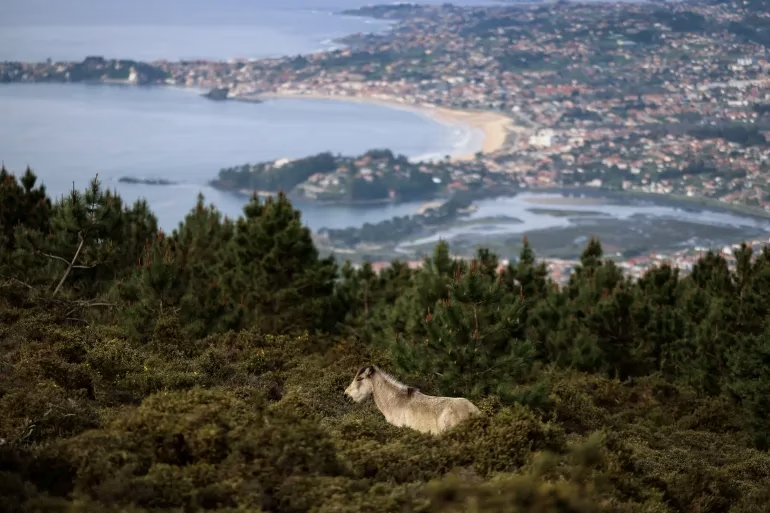
By the fifth glass of orujo, his stories about Esperanza's racing career sounded like legend. By morning, legend had become my very expensive reality.
I found this entry in Agustín’s journal last week, tucked between a wine-stained dinner invitation from 1962 and what appears to be a love letter written entirely in Portuguese (which he definitely didn’t speak). The date is January 7th, 1963 – the morning after Three Kings Day celebrations. His handwriting gets increasingly wobbly as the story progresses, suggesting he was still feeling the effects of whatever happened the night before…
The Portuguese Gambler Arrives (With Cards and Promises)
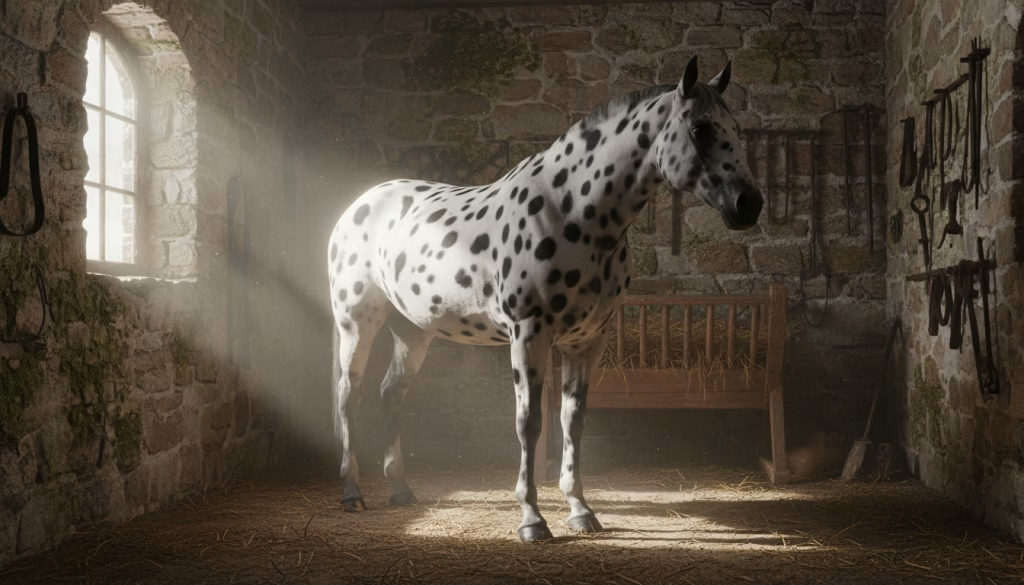
“A man named Henrique appeared at yesterday’s Reyes Magos celebration with a deck of cards, a bottle of something that wasn’t quite brandy, and the kind of smile that should have sent everyone home immediately. Instead, it drew half the village like moths to flame. He’d driven down from Porto, he said, to ‘experience authentic Galician hospitality.’ By the time we’d finished the caldo gallego (María Carmen’s recipe, naturally, which meant the entire Fernández family was sulking in the corner), Henrique had talked his way into our card game. ‘I have something better than money to wager,’ he announced, pulling out a photograph of the most beautiful horse I’d ever seen. ‘This is Esperanza. She raced in Lisbon last season.’ What he failed to mention, I would discover later, is that she raced poorly.
When Orujo Makes All Decisions Seem Brilliant
“The orujo was exceptional that night, distilled by old Tomás behind the church, the same Tomás who once tried to convince the priest that communion wine should be fortified ‘for spiritual intensity.’ By the third glass, Henrique’s Portuguese accent sounded like poetry. By the fifth, his stories about Esperanza’s racing career sounded like legend. When he suggested we play for the horse (‘Just one hand, winner takes all’) it seemed not just reasonable but inevitable. I remember thinking I was being brilliantly strategic, splitting aces when I should have stood pat. I remember Carmen’s husband Rodrigo shaking his head and muttering something about ‘city folk logic.’ I definitely don’t remember agreeing to stable fees, transportation costs, or the fact that Esperanza hadn’t actually won a race since 1960.
The Arrival (Three Weeks of Denial, Then Reality)
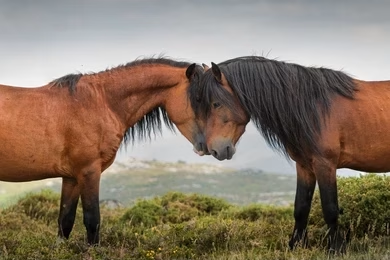
“I spent three weeks convincing myself it had been an elaborate dream. Then the truck arrived. A massive Portuguese transport vehicle that couldn’t possibly navigate our village streets, so they stopped at the main road and simply…unloaded her. Esperanza walked down from that truck like she owned the place, which, technically, she did. She was magnificent – glossy brown coat, intelligent eyes, and an immediate disdain for our provincial accommodations. Within an hour, she’d rejected the hay we’d hastily acquired, knocked over two water buckets, and somehow communicated that our wine selection was adequate but unimaginative. Rosa Méndez, who knows everything about everyone’s business, appeared with apples and informed me that horses were ‘just like men…expensive to maintain and convinced they’re more important than they actually are.’ She wasn’t wrong about either species.
Esperanza Joins Society (With Strong Opinions)
“It became clear within days that Esperanza had no interest in racing, farming, or any practical equine occupation. What she excelled at was social commentary. She would position herself near our vineyard tastings, somehow managing to look disapproving when guests chose poorly. During dinner parties, she’d lean her head through the dining room window, exactly at the moment someone was telling a particularly dubious story. Her timing was flawless. Father Miguel swore she could detect lies better than any confession booth. When we served the ’58 Ribeiro at Easter dinner, she actually neighed approvingly. When cousin Pilar tried to pass off store-bought empanadas as homemade, Esperanza’s snort could be heard in the next village. She became, without question, our most honest dinner guest.
Legacy of Poor Decision-Making
“Esperanza lived with us for seven years, never racing again but becoming the most celebrated personality in Tui. She outlasted two mayors, three harvest festivals, and my brief engagement to a woman from Vigo who couldn’t appreciate equine humor. When she finally passed in 1970, half the village attended her memorial service. Father Miguel, the same priest who’d initially declared her ‘an unnecessary complication’, gave a surprisingly moving eulogy about how God’s creatures come in many forms, some of them arriving via questionable card games. We buried her beneath the chestnut tree where she’d spent countless afternoons judging our seasonal celebrations. The tree still bears fruit every autumn, and I swear the chestnuts taste more sophisticated than before.”
What Agustín’s Mishap Taught Us About Life in Galicia
Never trust a Portuguese gambler who arrives with “something better than money to wager”(especially during Reyes Magos when the orujo flows freely). Also, the best Galician stories always start with someone making a terrible decision that turns into unexpected joy…this is a land where you’ll do best to embrace the chaos. Our own story, in fact, began with embracing beautiful messes rather than avoiding them. Esperanza may have been the world’s worst racehorse, but she was apparently an excellent judge of character, wine, and dinner party conversation. That seems like a perfectly reasonable trade for one questionable hand of cards.