

Three hundred years of good behaviour.
Give or take.
This Catholic rectory turned Galician hideaway holds ten rooms designed for character and comfort, a gourmet restaurant and bar where the garden decides the menu, a billiard room where all bets are off, and a piano salon for entertainment at all hours.
Book a roomGranite, moss, and a great deal of pure air.
Three hectares of orchard, vineyard, chestnut groves and a breadbox that receives fresh pán galego daily, delivered from the local baker. These gardens hold surprises at every turn.

The rectory, from the south lawn
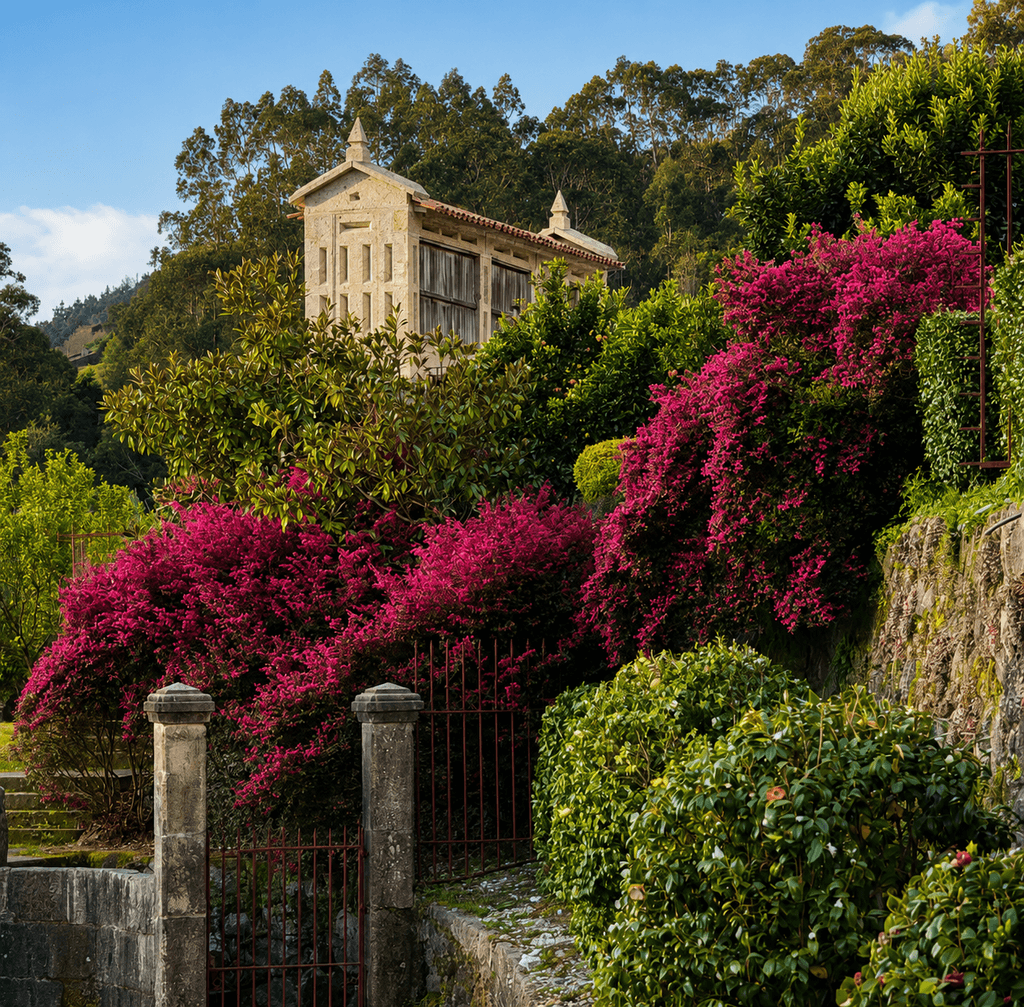
The hórreo

The sundial terrace

The pétanque court

The palomar

The vine pergola

The vineyard at dusk

Ten rooms, no two alike.
Our ten suites take their titles from the Galician names for trees scattered across the estate. Vimbio is intimate; Castañea has rather more room to make an entrance. Each is different, with centuries-old beams, some with baths made for lingering, and all with views that provide a persuasive reason to stay put.
Portuguese sateen sheets, pressed until perfectly crisp, await in every room, alongside a selection of our favorite Galician treats, a chilled bottle of Albariño, and a personal concierge just a call away.
Beds worth staying in past noon.
Original stone left where the masons left it, floors that creak in the places they should, and windows deep enough to sit in. Modern where it matters, and nowhere else.

The Prior’s Quarter

The Pilgrim’s Rest

The Novice’s Cell
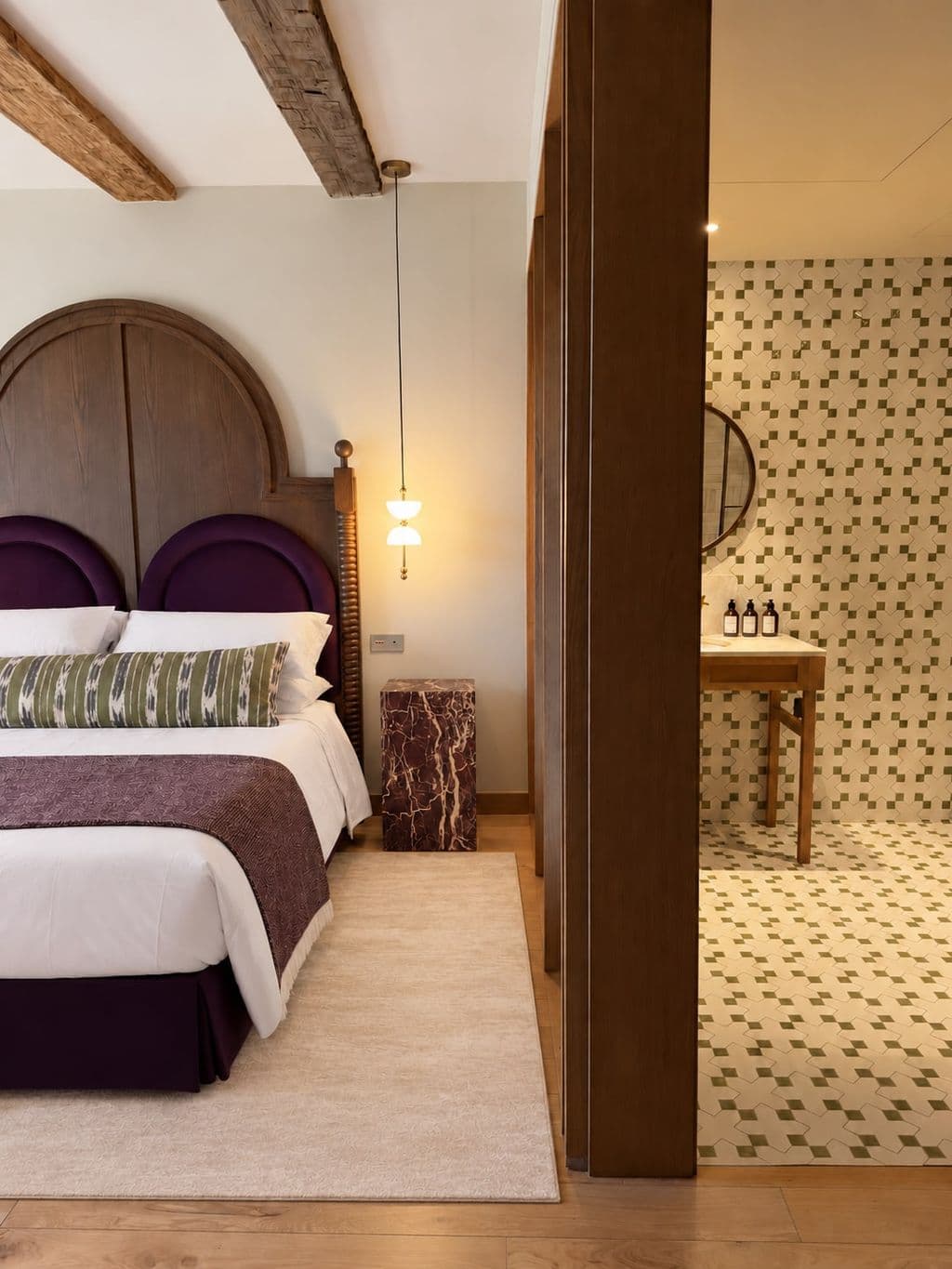
The Sinner’s Suite

The principal bath

Brass and steel

Stripes and salt-glaze

The best rooms have no beds in them.
The entrance hall sets the tone — a hundred amber lanterns strung beneath the beams, and a saint on the wall who has plainly seen worse. Beyond it sits the library, where the fire is lit by four and the reading is cheerfully interrupted.
The billiard room takes wagers it has no intention of honouring. The piano salon stays open as long as somebody is willing to play. Nobody here has ever been asked to move along.
Where everyone ends up.
Doors left open, fires lit early, and furniture you are actually meant to sit on. The common rooms do most of the talking here.

The salon

The billiard room

The entrance hall

The chess corner

The dining room

The powder room
The table is the entire point.
Galicia feeds people the way other places apologise. Percebes prised off the rocks that morning, pulpo á feira on a wooden plate, caldo that has been simmering since an argument in 1961 and shows no sign of resolving.
Breakfast runs long. Lunch runs longer. Dinner is served at one table, at one hour, to whoever is here — and it is very difficult to leave it early.
Do nothing, thoroughly.
The old stable block now holds a stone hammam, a sauna that smells of eucalyptus, and treatment rooms where the therapists use oils pressed from the estate’s own olives and herbs cut from the kitchen garden that morning.
Swim, steam, sleep on a heated bench, and emerge some hours later having accomplished absolutely nothing. Yoga on the terrace at eight, for the ambitious.

Everything on the plate grew here first.
A walled kitchen garden, a glasshouse warm enough to sit in through February, and twelve raised beds that dictate the menu rather than the other way around. The gardeners and the kitchen are in permanent, productive disagreement.
Guests are welcome to pick, prune, ask questions, and be handed a trug. There is no better way to understand a place than to dig in it.

A boardroom that smells of woodsmoke.
The old library works as hard as it looks: a twelve-seat table, full A/V and screen-share, fast fibre throughout the house, and a scattering of smaller rooms for the conversations that need a door.
Take the whole estate and it becomes yours — the kitchen, the garden, the spa, the long table at the end of the day. Teams arrive to decide something difficult and leave having also learned to shuck an oyster.